Decarbonization should not cost Europe its industry
A key question is becoming increasingly prominent in Europe’s climate transition debate: how can emissions be reduced without driving production, investment, and jobs away from Europe?
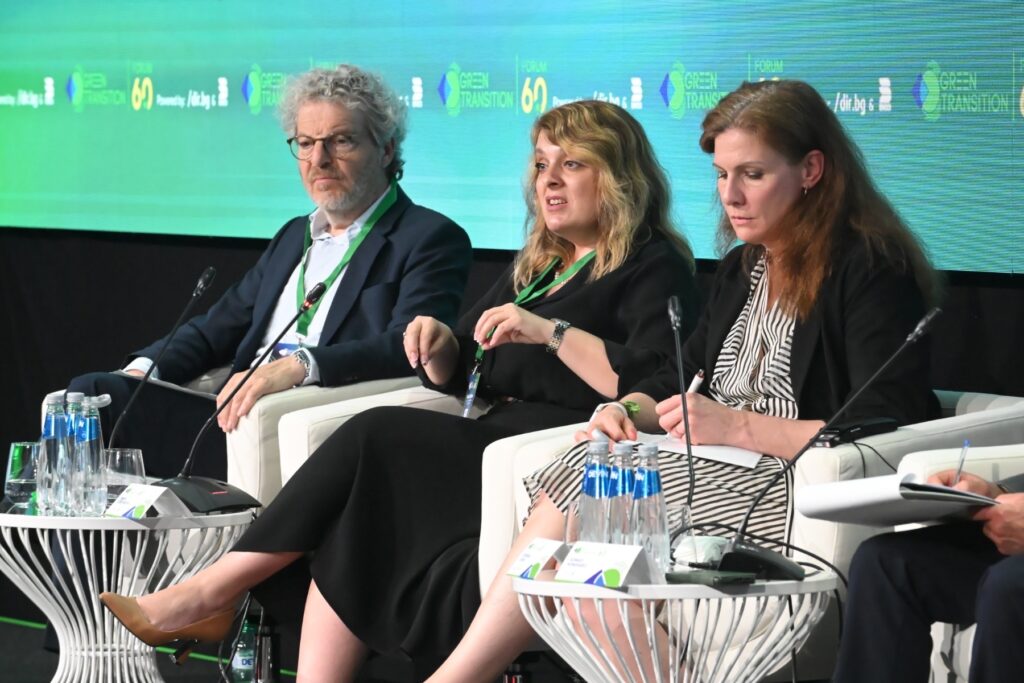
This topic was at the heart of the discussion “Carbon Policy and Competitiveness: Challenges and Opportunities” during Green Transition Forum 6.0, where Maya Stefanova, Director Environmental Affairs & Climate Action at Agropolychim, shared the fertilizer industry’s perspective on balancing decarbonization and competitiveness.
For the fertilizer sector, this challenge is particularly acute. Nitrogen fertilizer production is among the most energy-intensive and carbon-intensive industrial processes. Today, European producers face a combination of high energy prices, rising carbon costs, and an increasingly complex regulatory landscape.
However, the issue extends far beyond the competitiveness of a single industry. It affects the entire food value chain.
The cost of fertilizer production inevitably flows through to farmers and ultimately impacts food production costs. At the same time, European farmers operate under some of the world’s most stringent environmental standards, while a significant share of imported products is not subject to equivalent requirements.
The risk is clear: instead of reducing global emissions, Europe may shift production to regions with lower environmental standards, while simultaneously increasing its dependence on imports of strategic products and raw materials.
“Decarbonization should not come at the expense of Europe’s industrial base,” Maya Stefanova emphasized during the discussion.
According to her, European climate policy must be built on two equally important pillars: emissions reduction and industrial competitiveness.
Agropolychim’s experience demonstrates that achieving this balance is possible.
Over the past fifteen years, the company has consistently invested in energy efficiency improvements, renewable energy integration, production modernization, and the development of low-carbon ammonia solutions. These are long-term projects involving significant technological complexity and substantial capital investment, demonstrating that decarbonization can serve as a driver of industrial transformation rather than a constraint on growth.
Scaling such transformation across Europe will require a predictable regulatory framework, access to affordable clean energy, targeted financing instruments, and market mechanisms that create genuine demand for low-carbon products.
Ultimately, the success of Europe’s green transition will not be measured solely by the volume of emissions reduced. It will also be measured by Europe’s ability to remain a global hub for manufacturing, innovation, and sustainable agriculture.
Competitiveness and decarbonization are not conflicting objectives. They are mutually dependent. Agropolychim’s experience demonstrates that with a clear vision and sustained investment, the two can go hand in hand.